
DW's Blog
Contemplation
by DW Green — July 22, 2026
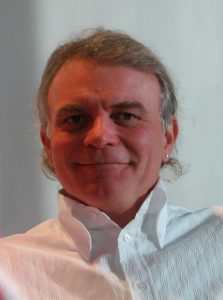
“ Mrs. Ferdale, Calling Into the Dusk.”
“ Mrs. Ferdale, Calling Into the Dusk.”
A VOICE ACROSS THE YARDS
Somewhere around dusk, on an ordinary evening of my boyhood, a woman down the block would open her door and call out into the neighborhood.
“Oh, Sylvia. Oh, Sylvia. Come home for dinner.”
That was Mrs. Ferdale. I can hear her still, and I am seventy-five years old. Here is the strange part, the part that has kept the memory alive when a thousand louder things have gone: I never met Sylvia. Not
once. I do not know if she was a daughter, or a cousin, or a girl I simply never crossed paths with, or — I have wondered this my whole life — something closer to a figment, a name I heard so often in the falling light that I built a whole girl out of it. She was called home every evening, and I never laid eyes on her.
A boy standing in a front yard, hearing a name called for someone he cannot see. I did not know it then, but I was being handed the whole thing, free, in a woman’s voice, at dusk.
SOMETHING SMART PEOPLE DID
Because for most of my life, I was certain contemplation was not for me.
Contemplation was something smart people did. Robed people. Still people. People with better attention spans and quieter heads. It sat on a high shelf beside all the other things I could not manage. I could
not hit a curve ball, and I could not contemplate a lick. Both required standing calmly in front of
something that was moving faster than I was, and I was never built for either. So I let it go — or rather,
I understood just enough to know I did not understand, and filed it away in the recesses of the mind where we keep the things that are too wise to throw out and too large to carry.
Part of the trouble was silence. Silence was a formidable barrier. It seemed like a wall, or worse, like
nothing at all — and nothing was terrifying. It was the same trouble I had with being. Doing I understood perfectly: doing was the action verb. Busy. Active. A list of chores to be scratched off, and when the
list was finished, the sweet accomplishment of making another one and beginning again. Being, by comparison, sounded a great deal like boredom. What is a man supposed to do with being?
NOT MEDITATION
It took me a long while to understand that contemplation is not the same as meditation, and that the difference matters.
As I have come to know it, meditation tends toward the quieting of the mind — the settling of the
surface, the stilling of the chop. And that is a good and worthy work. But contemplation is a different motion altogether. Contemplation does not merely calm the water. It goes down into it. It rests in the silence of the mind and lets that silence do the uncorking — releasing, bringing forward, the inner
language of the soul. The inner language of Being. You do not go into contemplation to think something through. You go in to be present to yourself, and to listen for what is calling you.
THE SEA
Here is the picture that finally taught me, and of course it is made of water.
Look at the surface of the sea. It is rough. Rolling waves, whitecaps, chop and crash and spray — all that motion, all that noise. That is the doing of a large body of water. It is impressive and exhausting and it
never stops. And nearly all of us live our whole lives on that surface, riding the waves of the list, certain that the churning is what the ocean actually is.
But go down. Just below the crashing there is already less disturbance. Deeper, and there is a calmness. Deeper still, and the peace extends outward in every direction at once, quiet and cold and enormous,
until at last it comes to rest on the bottom. The storm on top is real. The calm underneath is more real, and it is bigger, and it was there the whole time, and it is not something you have to build. You have only to sink.
Our own language knows this and has been telling us all along. When we want the truth of a thing, we say we will get to the bottom of it. The phrase we reach for when we hunt for what is real is a phrase about descent. Not climbing — sinking. The truth was never up in the spray. It pools at the bottom, the way water always pools in the low place. That is contemplation: not thinking harder on the surface, but letting yourself down into the depth where things are already quiet, and already true.
SITTING WITH WHAT MATTERS
So contemplation, as I have come to practice it in my late and clumsy way, is simply this: to slow down and sit with what matters, in silence. To sit inside oneself and listen for the body to speak. To tap into
the unlimited knowing that already exists within, and has been waiting for the surface to settle enough that it can be heard.
And the silence I feared as a barrier turned out to be the door. Silence is not the absence of sound; it is the absence of resistance. That is what I learned from a busy road I lived beside for thirty years and never once minded. The silence in contemplation is the same silence. It is not a wall. It is what is left when I stop arguing with what is.
DUSK
Which brings me back to the hour Mrs. Ferdale chose, though she was not choosing anything. She was calling a girl to dinner.
Dusk is the time of day when shadows disappear. Consider that. At noon the light is hard and every single thing casts a black shadow — each object cut sharply out of the world, edged and separate, distinct from its neighbor. Noon is the hour of separation, and the harder the light, the harder the edges. But at dusk the shadows do not lengthen into darkness so much as they dissolve. The edges
go soft. Things stop being cut out from one another and become one field of light going gently down. Separation, I have come to think, is a noon phenomenon. It requires hard light. Let the light soften, and the boundaries turn out never to have been there at all.
Dusk and dawn are the two hinges of the day — the moments before the doing begins and after it has laid itself down. And I believe they are the two moments when Being is trumpeted: the beauty and the
glory of oneness with all of life, announced twice daily, free of charge, to anyone standing in a yard with nothing to do. They are the day’s own solstices. The turn. The stillness at the top and bottom of the light. And they are, not by accident, the hours when the water goes glassy and you can see the moon lying on it.
WHAT REMAINS
I have been circling something for two years now and only lately dared to say it plainly, and even now I would rather come at it sideways, because the moment a thing like this is announced it hardens, and a hardened truth is just an opinion with its fists up.
So let me say it the way dusk says it. Wholeness may not be something we achieve. It may simply be
what remains when the illusion of separation dissolves. Recognition dissolves the separation; when the separation dissolves, knowing appears; and the knowing does not manufacture wholeness — it reveals it,
because the wholeness was never absent. We are born whole. Wholeness is not the prize at the end. It is who we already are, one with all things, waiting only for the light to soften enough to be seen.
Am I talking in circles? Perhaps. But contemplation does not travel in a straight line. It spirals, and it spirals downward, and if you follow it far enough it sets you on the bottom, where it is quiet.
A WORD ABOUT BELIEF
And am I forcing a belief? That question stopped me, so I went looking at the word, the way I do.
Belief comes to us from an old root meaning dear — the same family, it turns out, that gives us lief, and beloved, and, as I found once before, free and friend. To believe, at the root, did not mean to assent to a proposition. It meant to hold dear. To give your heart to something.
That distinction saves the whole matter for me. A belief in the modern sense is content — a position you hold, and anything held can be gripped, and defended, and pressed on other people. That is the closed
fist, and I want no part of it here. But a belief in the older sense is something you belove. It asks for no bodyguard. Recognition does not need defending; it only needs seeing. I am not asking anyone to agree with me about wholeness. I am telling you what I saw when the light went soft, and holding it dear, and leaving the door open.
COME HOME FOR DINNER
So here is where the spiral sets me down, on the bottom, where it is quiet.
Contemplation is being present to yourself and listening for what is calling you. And what is calling, I think, has been calling the whole time, in a voice you first heard before you had any idea what it was. For me it is a woman at a screen door in the falling light, calling a name across the yards for a girl I never met.
Because listen to what she is actually saying. Come home. Come eat. That is the oldest call there is, and it is the only one that has ever mattered. It is Don’s table, and every dinner I have ever been late
to, and the warm field I keep inviting everyone into. The call was never about Sylvia. Or rather — it was,
and it was also for me, and for the mess in the yard, and for the boy who did not mind it, and for anyone standing still enough in the soft light to hear a name being called and understand, at last, that it is his own.
I could not hit a curve ball. I could not contemplate a lick. And all the while I was standing in a front yard at dusk with my hand up, waving at a woman across the way, the shadows dissolving around me, being
called home for dinner.
Oh, Sylvia. Oh, Sylvia. It is getting dark, and the table is set, and someone who loves you is calling. Come home.
Filed Under: DW's Blog